Ceramic Coating Benefits for Vehicles in Harsh Weather: A Montana Winter Guide
Ceramic coating protects your vehicle in harsh weather by bonding a hard, slick, hydrophobic layer to the paint that repels road salt, brine, slush, and grime, so contaminants rinse off instead of sitting on your clear coat. It also makes snow and ice easier to clear and adds a layer of UV resistance. What it does not do is stop rock chips or rust-proof the underbody. For Montana drivers who face months of treated roads, gravel, and bright winter sun, knowing both sides of that equation helps you get the most out of the investment.
What Does Ceramic Coating Do in Harsh Weather?
A ceramic coating is a liquid polymer, typically based on silicon dioxide (SiO₂), that bonds to your vehicle's painted panels and cures into a hard, glass-like layer. At Imperial Auto Spa, we install Gtechniq ceramic coatings, and once cured, that layer acts as a sacrificial barrier between your factory clear coat and everything the road throws at it.
The core benefit is hydrophobic behavior. Water, and the salt dissolved in it, cannot grip a coated surface the way it grips bare clear coat. It beads up and sheets off, carrying much of the grime with it. If you want the science behind that effect, our guide on how modern ceramic coatings provide hydrophobic protection breaks it down in detail. Here is how that plays out against the specific threats of a Montana winter.
Road Salt and Chemical De-Icers
Salt and liquid de-icers are the most aggressive chemicals your paint faces between November and March. Chloride solutions left to dry on unprotected clear coat can leave white haze, dull streaks, and eventually chemical etching that takes machine polishing to remove. A cured ceramic layer is far more chemically resistant than bare clear coat, so the brine sits on top of the surface instead of working into it. That gives you a window of time to rinse it away before it causes lasting damage.
Winter Road Film and Grime
Winter road film is a sticky mix of tar, brake dust, exhaust residue, and the fine sand used for traction. On an uncoated panel, that film bonds to the surface and gets harder to remove with every week it stays there. On a coated panel, the slick, low-friction finish gives it very little to hold onto, and a pH-neutral shampoo with a gentle rinse usually lifts it clean.
Snow, Ice, and Frost
The same slick surface helps when you are clearing your vehicle on a cold morning. Snow tends to slide off coated panels more easily, and ice and frost generally do not bond as tightly to a coated finish as they do to bare paint. That means less scraping and less temptation to use tools that can scratch the finish.
UV Exposure on Bright Winter Days
Bright winter days and sunlight reflecting off snow add to your paint's UV exposure. A ceramic coating adds a protective layer over the clear coat that helps resist oxidation and fading, although it does not fully block UV radiation.
Where Ceramic Coating Falls Short
Car ceramic coating has real limits. It does not stop rock chips. A piece of gravel kicked up at highway speed will go through the coating and into the paint underneath, just as it would on an uncoated panel. It also does not protect your undercarriage, frame rails, suspension components, brake lines, or the hidden cavities where salt spray collects. If your paint already has a chip, salt can still reach bare metal through that opening no matter how well the surrounding panel is coated.
A coating also preserves the paint in whatever condition it is in on the day it goes on. It will not remove existing swirl marks, scratches, or etching. That is why we decontaminate, buff, and polish every car, truck, or SUV before installing a coating, and why every coating is paired with a paint correction package.
Pairing Ceramic Coating With Paint Protection Film
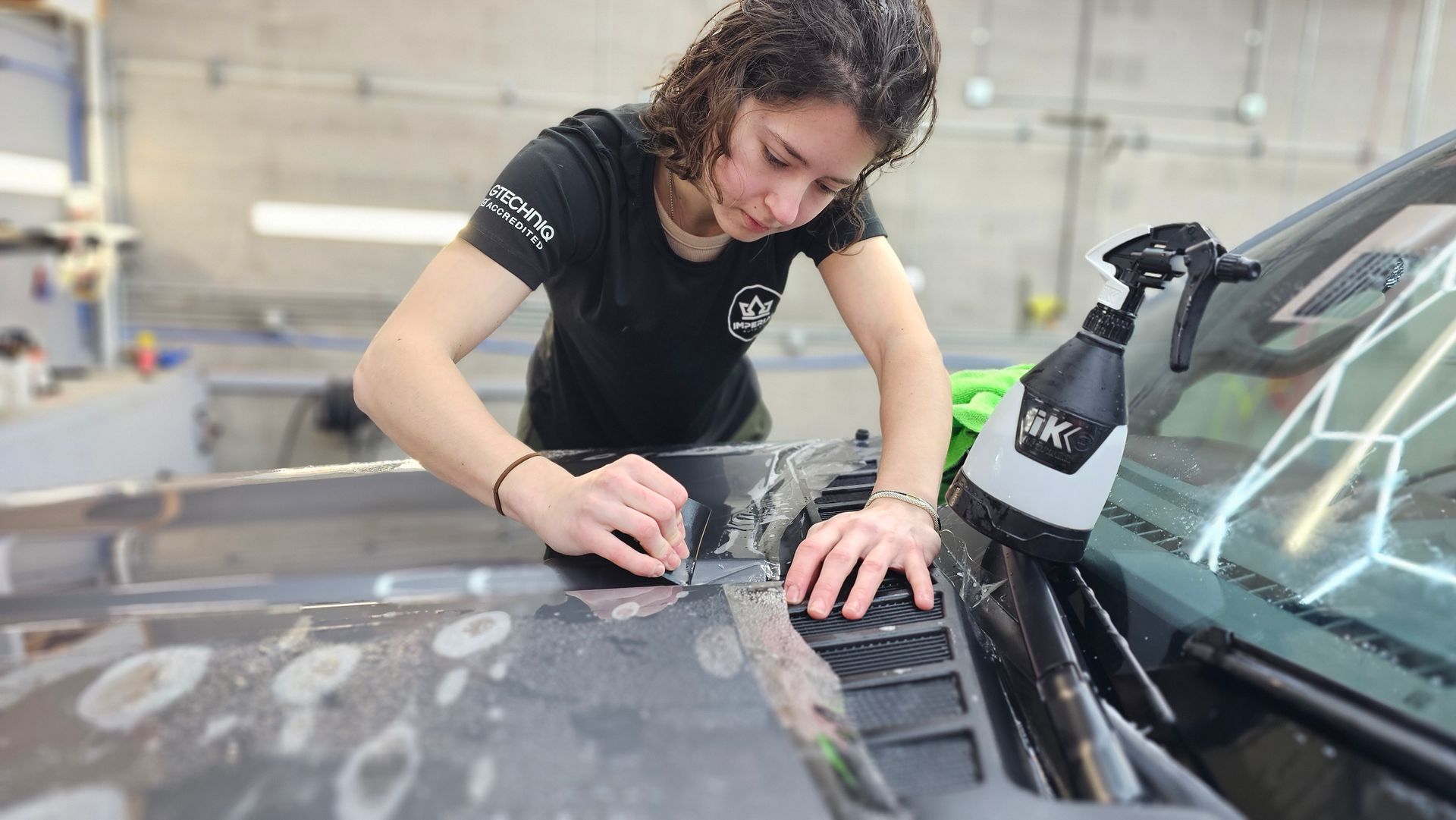
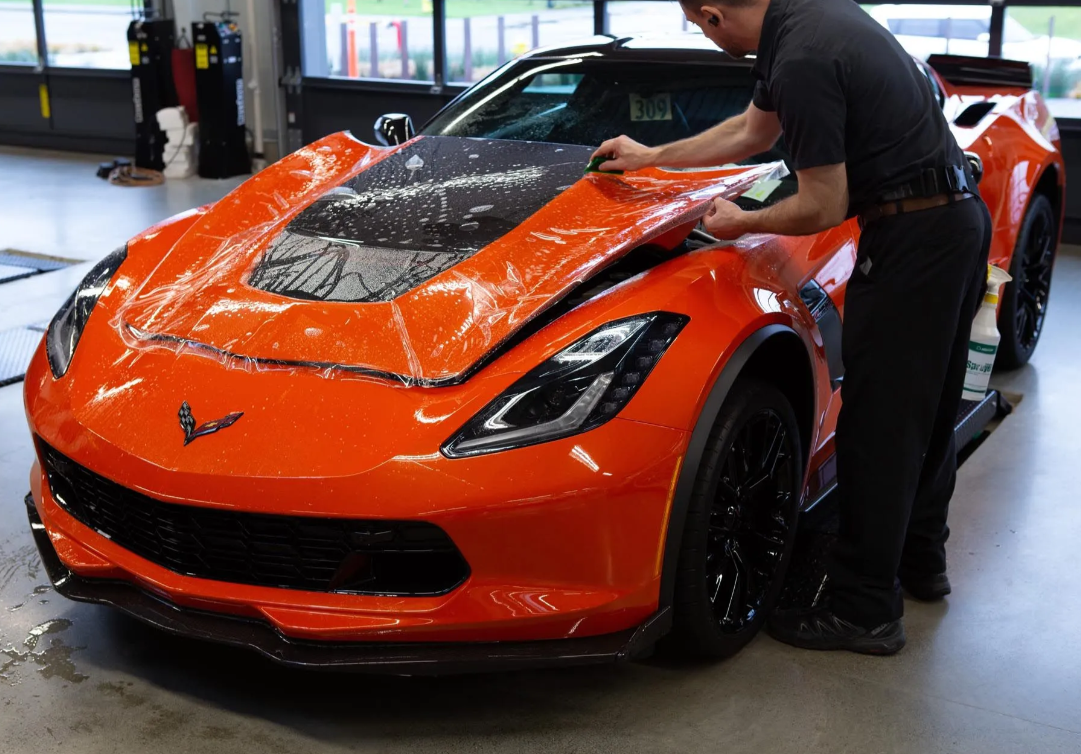
Because ceramic coating handles chemical exposure and PPF handles physical impact, the two work best together. We often recommend paint protection film on the high-impact zones that take the brunt of gravel and road debris: the front bumper, hood, fenders, side mirrors, and rocker panels. The film absorbs the hits, while the ceramic coating keeps the entire vehicle, film included, slick and easy to clean. If you are wondering which should go on first, our article on whether to get PPF or ceramic coating first walks through the timing.
We install
STEK paint protection film, and our team is certified in both STEK PPF installation and Gtechniq ceramic coatings.
Ceramic Coating vs. Wax, Sealant, and PPF
Traditional carnauba wax gives a warm glow and decent water beading, but it wears off within weeks and offers little resistance to salt and chemicals. Synthetic sealants stretch that window to a few months, but they still fall short of a cured ceramic layer. Our post on
ceramic coating vs. wax covers that comparison in more depth.
| Protection Type | Typical Lifespan | Salt and Chemical Resistance | Best For |
|---|---|---|---|
| Carnauba wax | A few weeks to about 2 months | Low | Quick shine between seasons |
| Synthetic paint sealant | Several months | Moderate | Budget seasonal protection |
| Gtechniq ceramic coating | 18 months to 5 years, depending on package | High | Long-term chemical and grime defense |
| Paint protection film (PPF) | Multiple years | High, plus a physical barrier | Rock chips, gravel, and impact zones |
Our ceramic coating packages range from Gtechniq EXO, rated for 18 to 24 months, to Crystal Serum Light at 3+ years and Crystal Serum Ultra at 5 years. Actual longevity depends on the package, the prep work done beforehand, and how consistently the surface is maintained afterward.
When to Apply Ceramic Coating Before Winter
Timing makes a real difference. Fall, before road crews start laying down salt and de-icer, is the ideal window. The coating cures in controlled conditions, and your vehicle enters winter already protected. A winter installation is still possible, but it needs to happen indoors in a climate-controlled shop, because cold, damp air interferes with bonding and curing and can shorten the life of the coating. Depending on the package, installation typically takes one to two days, plus the time needed for paint correction.
How to Care for a Ceramic Coating Through a Montana Winter
Once the coating is on, your washing routine becomes the biggest factor in how long it lasts. During heavy salt periods, wash every one to two weeks and rinse soon after driving on treated roads, ideally when temperatures are above freezing. A few habits make the biggest difference:
- Use a pH-neutral shampoo and pre-rinse every panel before touching it with a wash mitt.
- Pay close attention to the wheel wells, lower panels, and undercarriage, where salt concentration is highest.
- Choose touchless washes over brush-style automatic machines that drag grit across the surface.
- Dry door jambs and rubber seals to prevent freezing.
- Clear snow with a soft-bristle brush rather than a metal scraper or hard plastic blade.
For a full walkthrough, see our step-by-step guide to washing a ceramic-coated or PPF-protected car. Periodic professional detailing also helps keep the coating decontaminated, and our seasonal paint protection tips for Missoula cover the rest of the year.
Built for Real Montana Driving: Get a Free Quote From Imperial Auto Spa
Whether you drive a daily-driven pickup, a family SUV, or a weekend car you want to keep looking new, Imperial Auto Spa has been providing ceramic coating installation service for vehicles across Western Montana since 2019. Our certified team practices every technique on test panels before it ever touches a customer's vehicle, and we spend time each year researching new protection products from Gtechniq and STEK. You get an honest recommendation for what your vehicle actually needs, not a sales pitch.
Beyond Missoula, we serve drivers from Florence, Stevensville, Hamilton, Darby, Lolo, Superior, Drummond, Butte, Polson, Kalispell, and Mission Valley. Stop by our shop at 2603 Industry St, Suite F1, call us at 406-239-2088, or request your free quick quote online. Book before the next round of road salt hits, and head into winter knowing your paint is protected.
Frequently Asked Questions
Is ceramic coating worth it in a cold climate like Montana?
Yes, for most drivers. Winter is when a ceramic coating does its most visible work, because salt, brine, and road film rinse off far more easily and contaminants have less chance to etch the clear coat.
Does ceramic coating protect against road salt?
It protects the painted surfaces by keeping salt and brine from bonding to the clear coat and making them easier to rinse away. It does not protect the undercarriage or frame, and it cannot stop salt from reaching bare metal through an existing chip.
Does ceramic coating prevent rock chips?
No. Ceramic coating is a thin chemical barrier, not an impact barrier. For protection against gravel and road debris, we recommend paint protection film on the front end and other high-impact areas, with ceramic coating over the top.
Can ceramic coating be applied in winter?
Yes, as long as it is installed indoors in a climate-controlled shop. Cold and damp conditions interfere with curing, which is why outdoor or driveway application in winter is not recommended.
How long does ceramic coating last?
It depends on the product and how it is maintained. Our Gtechniq packages range from 18 to 24 months for EXO up to 5 years for Crystal Serum Ultra. Regular, gentle washing and periodic decontamination help any coating reach its full lifespan.
How often should I wash a ceramic-coated car in winter?
Every one to two weeks during heavy salt periods, plus a rinse soon after driving on treated roads. Use a pH-neutral shampoo and avoid brush-style automatic car washes.
Do I need paint correction before ceramic coating?
Yes. A coating locks in the condition of the paint underneath, including swirls and scratches. We decontaminate, buff, and polish every vehicle before installing a coating, even brand-new ones.