How to Wash a Ceramic-Coated or PPF-Protected Car: A Safe Step-by-Step Guide
To wash a ceramic-coated or PPF-protected car properly, park in the shade and let the panels cool, rinse off loose grit, then hand wash one section at a time with a pH-neutral car shampoo, a clean microfiber mitt, and the two-bucket method. Rinse thoroughly, dry right away with a soft microfiber towel or a filtered air blower, and keep pressure washer spray away from film edges. If the coating or film was just installed, wait about seven days before the first wash, or follow your installer's instructions.
A ceramic coating or paint protection film makes cleanup easier, but it does not make your vehicle scratch-proof or chip-proof. Around Missoula, where trucks and SUVs pick up gravel dust, mud, winter slush, and road salt, how you wash matters as much as what protects the paint. At Imperial Auto Spa, we install Gtechniq ceramic coatings and STEK paint protection film, and the steps below will help you keep either one looking its best between professional details.
Prepare Your Vehicle and Wash Supplies
Start by parking out of direct sunlight and checking that the hood and body panels feel cool to the touch. Heat makes soap and water dry faster, which leads to water spots and streaks before you can rinse them away. Set out your supplies before you start.
• pH-neutral car shampoo labeled safe for ceramic coatings or PPF. Skip dish soap, household cleaners, and abrasive pads.
• Two buckets, one for soapy water and one for clean rinse water. Grit guards in the bottom help trap dirt.
• A soft microfiber wash mitt and plush or waffle-weave microfiber drying towels.
• Separate tools for wheels and tires, since brake dust and road grit can scratch the finish if they transfer to the paint.
• A garden hose or pressure washer with a wide fan tip.
Rinse Away Loose Dirt First
Sand, dust, and road grit cause most wash-induced swirl marks. If a mitt drags those particles across the surface, they can leave fine scratches in the paint, the coating, or the film. A thorough pre-rinse carries most of that debris away before anything touches the vehicle.
Work from the roof down so water flows over each panel and pushes dirt toward the ground. Spend extra time on lower doors, rocker panels, bumpers, and wheel wells, where gravel-road dust and winter grime build up fastest. If you use a pressure washer, keep the wide fan tip at least 12 inches from the surface and
never aim a concentrated stream directly at PPF edges or seams, where water can get under the film and lift it.
Wash Gently with a Clean Mitt
Mix your shampoo according to the label, then wash one small section at a time. Start with the cleaner upper panels like the roof, glass, and hood, and leave the dirtier lower panels for last. After each section, rinse the mitt in the plain-water bucket before loading it with fresh soap. This two-bucket routine keeps the grit you just removed from going back onto the paint. If the rinse water turns visibly dirty, dump it and refill.
Keep the surface and mitt wet, and use light, straight passes instead of circular scrubbing. Around PPF, move the mitt along the film edge rather than into it so you do not catch or push the film. If a spot does not come off with a normal pass, do not press harder. Pre-soak it with a little more shampoo or a coating-safe quick detailer and try again.
Rinse and Dry Without Water Spots
Water spots form when water evaporates and leaves minerals behind. Coatings and film resist spotting better than bare paint, but hard water left to dry in the sun can still leave stubborn marks. Give the vehicle a final top-to-bottom rinse until all suds are gone, then dry it right away. Do not let it air-dry.
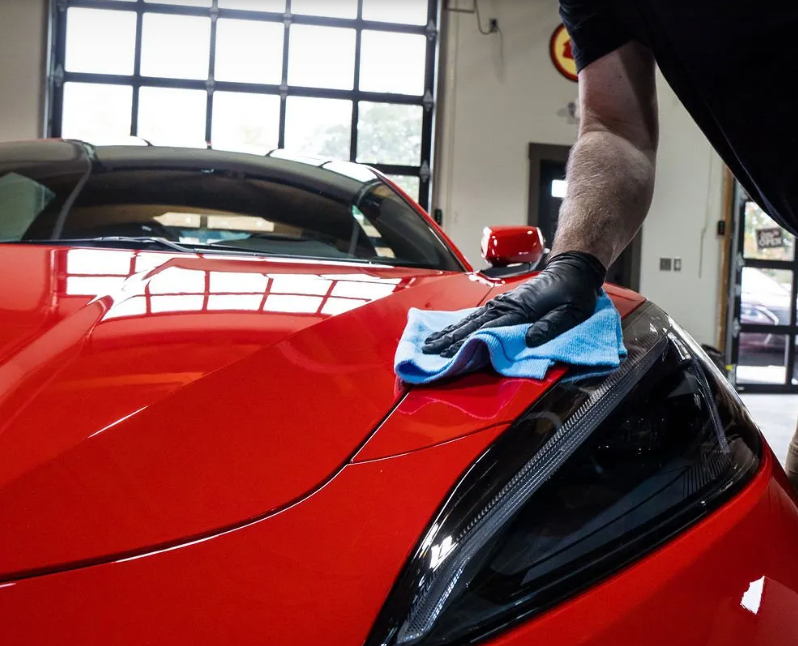
Lay a clean microfiber drying towel on the panel and blot, or glide it lightly across the surface without pressing. Switch to a fresh towel once the first one is saturated or picks up any dirt. A filtered air blower works well for mirrors, badges, grilles, and trim gaps, where water likes to hide and drip out later. Near PPF, point the airflow across the film rather than straight at an exposed edge.
Protect PPF Edges and Coated Surfaces
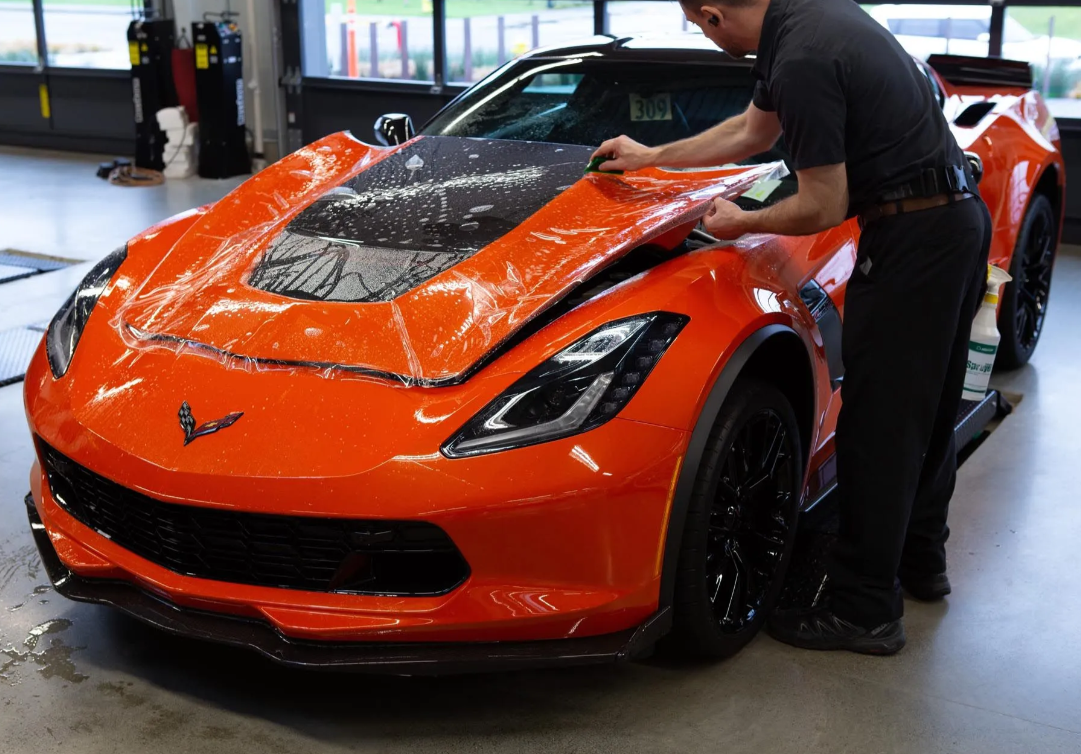
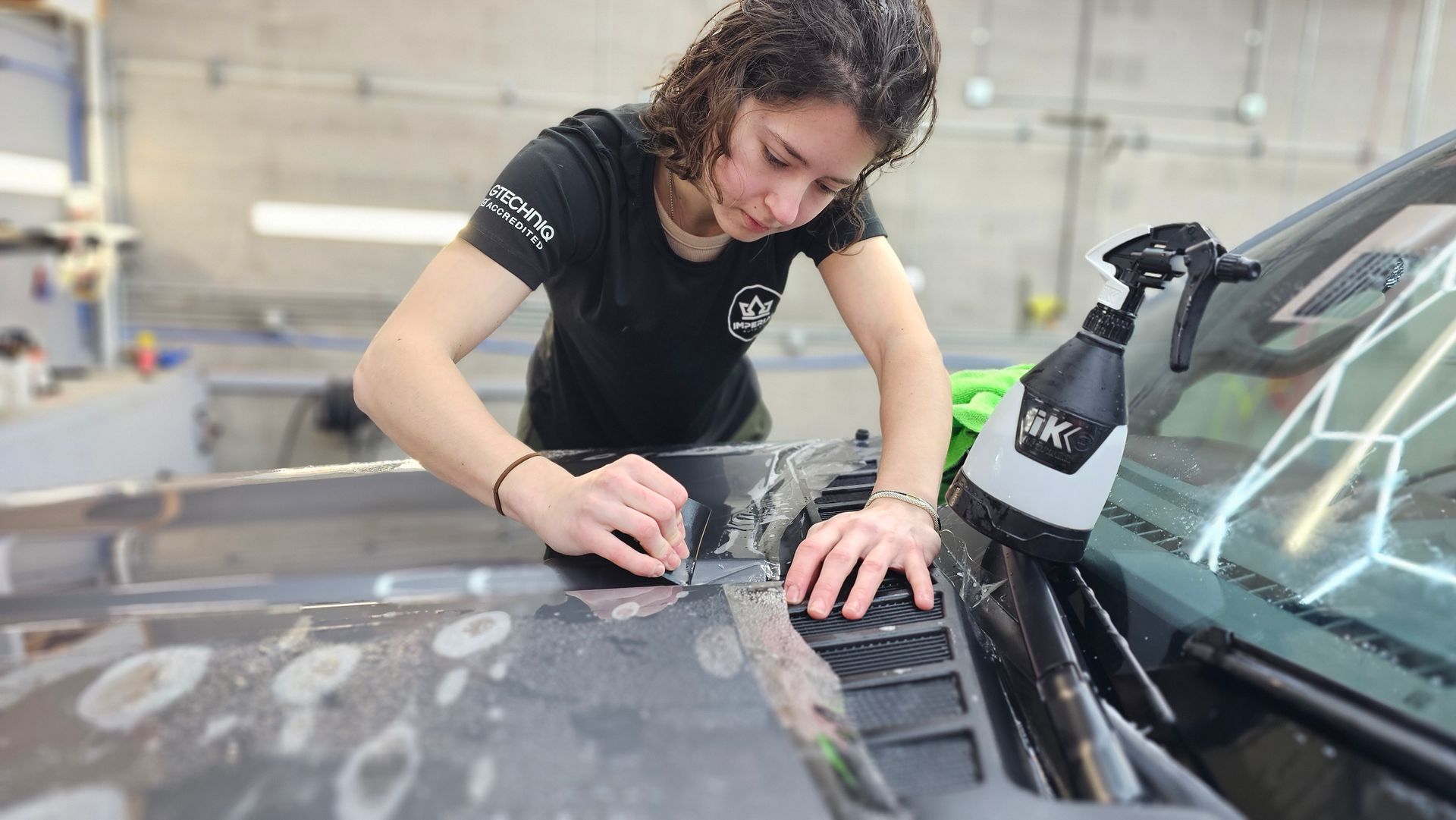
PPF is a physical urethane layer over the paint, so its edges and seams are the most vulnerable areas when it comes to high-pressure water, harsh chemicals, and aggressive wiping. Our STEK film has a self-healing top layer that can recover from light surface marks, but poor washing habits can still lift, stain, or cut it. A ceramic coating has no edges to lift, but abrasive washing can still swirl it, and it does not stop rock chips.
For both, stick with gentle, pH-neutral products and avoid abrasive polishes, compounds, and cleaner waxes unless the coating or film maker approves them. Leave any machine polishing of PPF to a professional. If you notice an edge starting to lift, keep water away from it and have your installer inspect it instead of trying to press it back down yourself.
Remove Bird Droppings, Bugs, and Tree Sap Safely
Bird droppings, bug splatter, and tree sap get harder to remove the longer they sit, especially in summer sun. Never scrape or dry-wipe them. Soften the spot with water or a coating-safe quick detailer, let it dwell for the time stated on the label, then lift it with a clean, damp microfiber cloth using light pressure. If residue remains, reapply and repeat rather than scrubbing. Test any unfamiliar product on a small, hidden area first.
| Contaminant | Safer approach | Avoid |
|---|---|---|
| Bird droppings | Soften with water or a compatible quick detailer, then lift gently | Dry wiping, scraping, or pressing hard |
| Bug splatter | Pre-soak with a coating- or film-safe bug remover, then lift | Harsh bug-and-tar removers the manufacturer has not approved |
| Tree sap | Let a compatible cleaner soften the sap before lifting | Picking at it with a fingernail or sharp tool |
| Road salt and slush | Rinse lower panels and wheel wells soon after driving on treated roads | Letting salt residue sit for weeks |
Follow Curing Time and Routine Care Guidance
Fresh ceramic coatings and PPF need time to cure before their first wash. Cure time depends on the product and conditions, so there is no single rule for every vehicle. A common guideline is to wait about seven days before washing or otherwise disturbing the surface, and cold or wet weather can slow curing. Always follow the aftercare instructions from your installer.
Once the protection has cured, wash regularly instead of letting grime build up. In a Montana winter, rinse salt and slush off the lower panels as soon as you can, and wash in a heated garage or on a milder day so water does not freeze in door seals or around film edges. Periodic professional decontamination also helps extend the life of a ceramic coating, which is where our exterior detailing fits into a long-term care routine.
Keep Your Protection Looking Its Best with Imperial Auto Spa
Washing correctly at home goes a long way, but every coating and film benefits from professional care, too. At Imperial Auto Spa, we are certified in Gtechniq ceramic coatings and STEK paint protection film. Our Base Exterior Detail includes a two-bucket hand wash, hand-washed wheels and tires, paint decontamination to remove bugs, tar, and grime, cleaned door jambs, and glass cleaned inside and out. If your vehicle needs more than a wash, we can check whether paint correction or added protection makes sense.
Whether you drive a daily commuter, a work truck, or a weekend off-roader, we can help you protect the investment you have made in it. We serve drivers from Missoula and nearby communities, including Lolo, Florence, Stevensville, Hamilton, Polson, and Kalispell. Call us at 406-239-2088 or request a free quote, and visit our shop at 2603 Industry St, Suite F1, Missoula, MT 59808.
Frequently Asked Questions
How long after ceramic coating or PPF installation can I wash my car?
Most installers recommend waiting about seven days before the first wash, although the exact cure time depends on the product and the weather. Follow the aftercare instructions from your installer, and check with them before removing any contaminants during that period.
How often should I wash a ceramic-coated or PPF-protected car?
Every one to two weeks works for most vehicles. Wash sooner after driving on salted winter roads or dusty gravel roads, or whenever bird droppings, bugs, or sap land on the surface. Protection makes washing easier, but it does not make it optional.
What products are safe to use on ceramic coatings and PPF?
Use a pH-neutral car shampoo, clean microfiber mitts and towels, and quick detailers labeled safe for coatings or film. Avoid dish soap, harsh degreasers, abrasive polishes, and cleaner waxes unless the coating or film maker approves them.
How do I wash my car without causing scratches or swirl marks?
Rinse off loose grit first, wash in the shade with a pH-neutral shampoo and a clean microfiber mitt, and use the two-bucket method so dirt stays out of your wash water. Work from the top down with light, straight passes, and dry with a soft microfiber towel.
Is a touchless car wash or a hand wash better for a protected vehicle?
A careful hand wash is the safest option. A touchless wash is more convenient, but many use strong pre-soak chemicals and high-pressure jets that can wear on some coatings and hit film edges directly. Avoid brush or soft-touch automatic washes, which can drag grit across the surface.
Can I use a pressure washer on PPF?
Yes, with care. Use a wide fan tip, keep the nozzle at least 12 inches from the surface, and never aim the spray directly at film edges or seams. If an edge looks lifted, keep water away from it and have your installer take a look.
Do I need to wax a ceramic-coated car?
No. A ceramic coating replaces the need for routine waxing, and many waxes can mask the coating's water-beading behavior. If you want extra slickness, ask your installer about a topper made for your specific coating.
Are there special drying and maintenance steps after washing?
Yes. Dry promptly with a clean microfiber towel or a filtered air blower, and clear water from mirrors, trim, and seams so it does not drip and spot. Skip abrasive polishes and follow your installer's care schedule for any maintenance products.